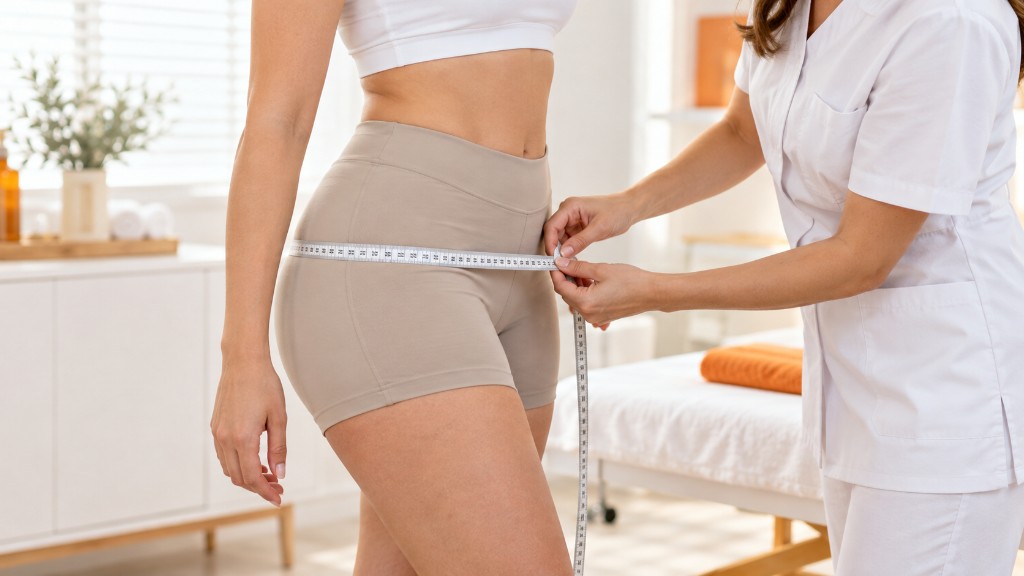
What is cryolipolysis?
Cryolipolysis, sometimes called fat freezing, is a nonsurgical approach that uses controlled cooling to address localized fat deposits. In a common procedure described by the American Society of Plastic Surgeons, tissue is held in an applicator using vacuum suction and cooled under controlled conditions. [1] This description should not be taken to mean that every device using cold works in exactly this way.
When a provider says that they offer cryolipolysis, treat the term as the beginning of the explanation. You still need to know the device model, the applicator being used and the proposed treatment protocol. A technical name alone does not tell you all the details of the service you are considering.
After asking “What is cryolipolysis?”, ask “Which treatment are you proposing for me?” Request a description that connects the equipment and treatment area to your individual goal. Comparing packages only by price or appointment length leaves important questions unanswered.
The same principle applies when a clinic uses a broader phrase such as cold-based contouring. Ask whether that phrase refers to an established technique, a particular device or a package combining several stages. Clear terminology makes it easier to understand what you are actually being offered.
What is CryoSlimming, and how does Termal Şok describe it?
Termal Şok describes its CryoSlimming application through a thermal approach involving warm and cold applications. [2] This tells us how the website presents its service. It is not a substitute for independent clinical research or documentation establishing a particular device's regulatory authorization.
When the name CryoSlimming appears in a consultation, separate the service name from the equipment name. Ask for the exact manufacturer and model of the device that would be used. A word appearing in several service descriptions does not prove that each provider is delivering an identical treatment.
You can also ask for a written explanation of the sequence of stages, the treatment area and the follow-up arrangements. The purpose is to understand the proposed service, rather than to choose temperature or timing settings yourself. Those details should be explained in the context of the device instructions and your suitability assessment.
A package description may help you identify a service you want to discuss. It should then lead to a more specific conversation about the procedure itself. Knowing the commercial name is useful, but it is only one part of an informed comparison.
Are cryolipolysis and CryoSlimming the same thing?
The two names should not automatically be treated as interchangeable. Cryolipolysis describes a technical approach, while CryoSlimming is the application name used by the website considered here. Equally, the names alone do not prove that the treatments have entirely unrelated mechanisms. Actual similarities and differences depend on the equipment and protocol.
The statement “both use cold” does not establish equivalence. The applicator, tissue contact, sequence of temperature changes, treatment area and outcome assessment all belong in the comparison. Without this information, describing one application as a newer, stronger or safer version of another would be premature.
The following table is a guide to the information to request. It does not rank one service above another or predict which treatment would be suitable for you.
| Comparison point | Cryolipolysis | CryoSlimming at Termal Şok |
|---|---|---|
| What does the name describe? | A controlled-cooling technique | An application presented on the website |
| General description | An approach targeting localized fat deposits [1] | A thermal approach described using warm and cold stages [2] |
| Device and applicator | The actual model and applicator must be identified | The actual model and delivery method must be identified |
| How should evidence be checked? | Review the device, area and protocol studied | Check whether the evidence actually matches the proposed application |
| How should the goal be defined? | By the appearance of a specific area and individual suitability | By the appearance of a specific area and individual suitability |
| What else informs the decision? | Risks, alternatives, cost and follow-up | Risks, alternatives, cost and follow-up |
Fat reduction, weight loss, cellulite and firmness are different goals
The phrase “fat freezing for weight loss” can create an expectation of a substantial change on the scales. According to the FDA, contouring is not obesity or weight-loss treatment. [3] Describe whether your priority is general weight management or the contour of a particular area.
Do not combine localized fat, cellulite and loose skin into one promised outcome. The American Academy of Dermatology explains that cryolipolysis targets fat pockets and is not a treatment that removes cellulite. [9] Discussing the volume of an area does not establish that your expectations about skin texture or firmness have also been addressed.
Termal Şok presents CryoToning as a separate application associated with a firmer, toned appearance. [10] The distinction between service names does not establish an individual result. Ask which proposed application relates to each of your goals and how those goals would be assessed.
For example, someone asking for a change around the waist may also be concerned about loose skin. These concerns should be described separately during the assessment. Otherwise, a plan focused on contour could be accepted with an expectation about skin firmness that was never discussed.
You can explore the distinctions in our guides to localized body contouring, cellulite appearance and loose skin after weight loss.
What should you look for in the scientific evidence?
The existence of a study and its relevance to your proposed treatment are separate questions. Check which device was used, which area was treated, how many treatments were performed and when outcomes were measured. A study title or an isolated success figure does not answer all these questions.
In a randomized trial by Falster and colleagues, the single-session cryolipolysis protocol studied did not demonstrate an advantage over the control group for lower-abdominal fat thickness. [5] This finding does not establish that all cryolipolysis treatments are ineffective. It illustrates why a result from one protocol should not be generalized to every device or service.
Dahmann and colleagues studied mud-pack heating after cryolipolysis and found less reduction in fat thickness on the heated side. [6] This was not a CryoSlimming trial. Its particular heating arrangement cannot be used to determine the results of the Termal Şok application. For the same reason, simply combining warm and cold stages is not evidence of greater effectiveness.
Ask the provider to explain how any research they present relates to the treatment being proposed. If a study used a different device or procedure, that distinction should be made clear. An honest explanation of the evidence may include limitations rather than a single confident percentage.
Apply similar scrutiny to before-and-after photographs. Ask whether the person was photographed with comparable posture, lighting and camera distance, and whether weight changes or other treatments occurred between images. A photograph without that context should not become a prediction of your own outcome.
What should an “FDA approved” claim actually show?
If a regulatory claim is made, ask for the exact device model and the relevant documentation. The FDA explains that registration or listing does not mean that a device has been approved, cleared or authorized for a particular use. [7] “FDA registered” is not interchangeable with a device-specific authorization.
When documentation is supplied, check whether the device named in it is the device that would be used on you. Also check whether the stated use covers the proposed procedure. A link to a general technology information page does not complete either of these checks.
The FDA material cited in this guide provides general information. This article has not verified model-specific FDA authorization for the equipment used in Termal Şok's CryoSlimming application. If a provider makes that claim, request an explanation based on the actual documentation.
Regulatory terminology should help make a comparison more precise. It should not replace the discussion of suitability, possible risks and the evidence for the particular procedure. Keep all of those questions in the consultation, even when a document has been provided.
How should suitability be assessed?
A consultation should cover more than choosing an area from a treatment menu. ASPS recommends discussing goals, medical history, medicines and previous procedures when considering nonsurgical fat reduction. [8] Share relevant information even if it seems unrelated to an appearance-focused appointment.
The ASPS cryolipolysis guidance specifically identifies certain cold-related conditions as suitability concerns. [1] If you have an unusual reaction to cold or a diagnosed condition, tell the provider before a procedure is planned. Do not treat an online checklist as a definitive assessment of your own suitability.
Also mention pregnancy, breastfeeding, recent procedures and ongoing medical care. ASPS lists pregnancy and breastfeeding as reasons someone should not undergo nonsurgical fat reduction. [11] For CryoSlimming, the actual device instructions and an individual clinical assessment should guide the decision.
You can prepare for the consultation by bringing a concise account of your goals and health history. This helps keep the conversation specific, but it does not mean you must choose a procedure at that visit. Requesting an assessment before deciding whether to proceed is a reasonable next step.
Potential side effects and the follow-up plan
AAD's overview of noninvasive fat removal includes possible swelling, bruising and discomfort, depending on the method. [4] Ask about the risks of the actual device being proposed and the expected recovery process. The word “nonsurgical” does not establish that a procedure has no side effects.
Cryolipolysis can cause paradoxical adipose hyperplasia: enlargement of treated fat that may persist and require surgery. [3] A different application name does not, by itself, establish that a related risk is absent; the assessment must consider the actual equipment.
Before treatment, find out whom to contact, when a review is planned and how an unexpected change would be assessed. If you notice a new lump, marked enlargement or a persistent symptom, request medical evaluation rather than simply continuing sessions while documenting photographs.
A follow-up plan should be understandable before you pay for a package. Ask who is responsible for reviewing concerns and whether an in-person assessment is available when needed. Written aftercare information is useful when it explains what to do, rather than only describing the service.
How should you compare sessions, timing and prices?
AAD explains that the results of noninvasive fat removal generally appear gradually. [4] An immediate post-treatment measurement should not be treated as the only assessment of the final result. Ask when a review is appropriate for the proposed procedure and which outcome will be tracked.
When comparing a quote for the abdomen, waist or another area, clarify exactly what the package covers. Does one session mean one applicator placement or treatment of the whole area discussed? Also ask whether the initial assessment and follow-up appointments are included in the price.
A fixed session number provided without an assessment is not an individualized plan. After your assessment, ask why that number has been suggested, under what circumstances the plan might change and what would happen if the expected change did not occur. The explanation should connect the package to your own goal.
Include the total cost in your comparison, rather than looking only at the advertised price per appointment. A clear quote should identify the agreed area, number of visits and included reviews. If additional sessions are optional, learn how that decision would be made.
The shortest appointment or lowest price may be easy to compare, but neither explains the full service. Use the same questions for each provider so that differences in scope, evidence and follow-up are easier to recognize.
A practical checklist for your consultation
Before your appointment, write your main goal in one sentence, such as “I want to have the localized fullness around my waist assessed.” Add separate concerns about skin looseness or cellulite if they matter to you. This makes it easier to connect a proposed treatment with the change you actually want to discuss.
Ask for the following information:
- The exact device name, model and planned treatment area.
- The main stages of the protocol and why it is being suggested for you.
- How the research presented relates to that equipment and application.
- Individual risks, alternatives and the option of having no procedure.
- The review schedule, total cost and contact arrangements for unexpected concerns.
Consider the answers together. Receiving a technical explanation does not require you to make a decision on the same day. You can ask for time to read the proposed plan or seek another professional opinion before proceeding.
If an answer is unclear, ask the provider to explain it in plain language. You should be able to identify the goal of the procedure, the basis for recommending it and how progress would be reviewed. A list of technical terms alone does not establish that those points have been covered.
Can ice at home replace professional cryolipolysis?
No. The safety and effectiveness of home fat freezing are unestablished. [3] Do not attempt to imitate a controlled professional procedure by applying ice or improvised cooling materials to your skin.
Similarly, do not turn temperature or timing information from a professional treatment description into a home-use recipe. The purpose of asking about a protocol is to understand how it is supervised. Repeating stages seen online does not reproduce the device's protective measures or suitability assessment.
Discuss a treatment you are considering with a qualified professional who can assess your circumstances and explain the actual device. A familiar term on a product listing is not enough to show that it delivers the same procedure discussed in clinical information.
How can you discuss the options with Termal Şok?
When you contact Termal Şok, describe your priority area and goal, then request information about the device, proposed plan and suitability assessment. Mentioning CryoSlimming as a service of interest should lead to a discussion of your specific expectations.
If you also want to discuss cellulite or skin firmness, raise those goals separately. Ask which service, if any, is being proposed for each concern, and avoid assuming that one application name includes every desired change.
When comparing cryolipolysis and CryoSlimming, the useful starting point is a clearly defined procedure. Consider the equipment, evidence, risks and follow-up together. A consultation that answers your individual questions is more useful than a comparison based only on similar treatment names.
Frequently Asked Questions
Is cryolipolysis the same as CryoSlimming?
The names alone do not establish equivalence. Cryolipolysis is a technical term, while CryoSlimming is the application name used on the Termal Şok website. Compare the exact device, delivery method and protocol to understand any similarities or differences. [1][2]
Is CryoSlimming more effective than cryolipolysis?
This guide has not established that superiority. A meaningful comparison needs suitable research on the relevant devices and protocols addressing the same goal. General technology research does not automatically demonstrate that one named service is better than another.
Does cryolipolysis make you lose weight?
Body contouring is not weight-loss treatment. [3] Discuss a goal involving the scales separately from a goal involving the appearance of a particular area.
Does cryolipolysis remove cellulite?
AAD does not identify cryolipolysis as a treatment that removes cellulite. [9] Localized fat and surface dimpling should be considered as separate treatment goals.
How many cryolipolysis sessions are needed?
There is no single number appropriate for everyone. The proposed device, area and assessment plan need to be explained. Before comparing session counts, clarify the intended change and when the result would be reviewed.
Are cryolipolysis and CryoSlimming risk-free?
They should not be described as risk-free. Side effects and suitability considerations depend on the actual procedure. Ask about your individual risks, follow-up arrangements and where to seek assessment if an unexpected concern arises.
Can I perform cryolipolysis at home using ice?
Do not try to imitate a professional procedure with ice. These products' safety and effectiveness are unestablished. [3] Treatment temperatures and timings found online are not instructions for home use.
What should I ask before choosing a treatment?
Ask about the exact device, protocol, individual suitability, relevance of the evidence, risks, alternatives and total cost. Also clarify the timing of follow-up and how the intended result would be assessed.
Are you ready?
You do not need surgery to achieve younger, firmer and more radiant skin.
Visit Termal Shock today and redefine your natural beauty with a free Cryo T-Shock consultation!
Tighten naturally. Glow forever. Resync your radiance with Termal Shock.
Sources and verifiable information
You can review the sources used while preparing this article below. Links open directly at the publisher.
- ASPS — Cryolipolysis
- Termal Şok — CryoSlimming
- FDA — Non-Invasive Body Contouring Technologies
- AAD — Non-invasive fat removal: What can you expect?
- Falster et al., 2020 — Effects of cryolipolysis on lower abdomen fat thickness of healthy women and patient satisfaction: a randomized controlled trial
- Dahmann et al., 2023 — Active Heating following Cryolipolysis Reduces Efficacy and Side Effects: A Randomized Split-Body Trial
- FDA — Are There “FDA Registered” or “FDA Certified” Medical Devices? How Do I Know What Is FDA Approved?
- ASPS — Nonsurgical Fat Reduction: Consultation
- AAD — Cellulite treatments: What really works?
- Termal Şok — CryoToning
- ASPS — Nonsurgical Fat Reduction
Sources reviewed on 6 October 2026. This article provides general information and does not replace an individual medical assessment. Termal Şok pages are cited to explain how the website presents its services. General technology references and research on other protocols are not presented as device-specific evidence of CryoSlimming effectiveness, superiority or FDA authorization.