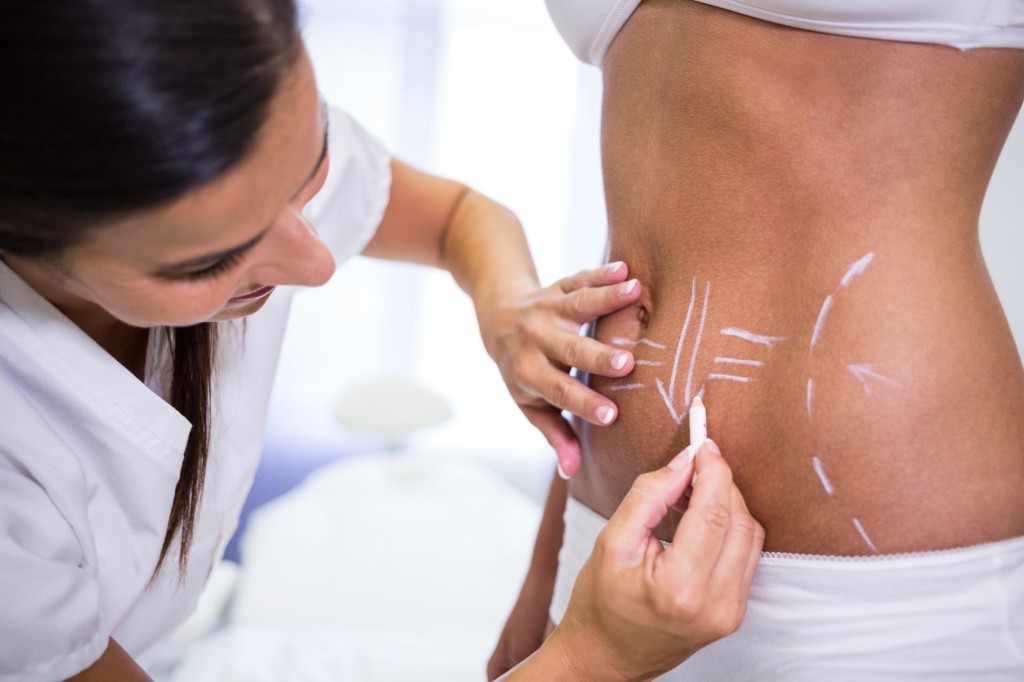
What does belly fat reduction mean?
Belly fat reduction is a broad search phrase used by people who want their abdomen to look slimmer. It does not identify one procedure or one underlying concern. Someone may seek overall weight loss, another person may want local waist fullness assessed, and someone else may be concerned about loose-looking skin after losing weight.
Before searching for a method, explain what you want to change. Is your goal scale weight, the contour of a particular area, or skin appearance? Your answer helps define the options to discuss at the first consultation.
You can expand “I want a slimmer abdomen” with a more specific statement: “I want help with weight management” or “I want to discuss local waist fullness separately from my weight.” This does not establish a diagnosis; it helps you understand which goal the proposed plan addresses.
Abdominal fat: Subcutaneous and visceral fat
Mayo Clinic describes subcutaneous fat as being beneath the skin and visceral fat as being within the abdomen around internal organs. Excess visceral fat is associated with health risks. [1] Do not treat these fat compartments as the same assessment topic based on abdominal appearance.
Separate an aesthetic contour goal from a health assessment. A service targeting abdominal appearance does not establish treatment for visceral fat or metabolic health. Tell your clinician if you are concerned about your waist and health.
Do not decide which tissue needs treatment by pinching your abdomen, looking at a photograph or using a tape measure alone. Ask how the assessment relates a finding to your goal. An aesthetic plan should not be assumed to answer every health question you have.
Is abdominal fullness always fat?
The NHS describes bloating as abdominal fullness and discomfort and advises assessment for frequent or persistent symptoms. [2] Fullness that changes through the day should therefore not automatically be interpreted as local fat.
Note when the symptom began, whether it changes during the day and whether you have accompanying discomfort. Share this information at the consultation. An aesthetic care package does not replace investigation of persistent digestive symptoms.
Seek medical advice for a new lump, persistent bloating or unintentional weight loss. Sudden severe abdominal pain needs emergency assessment. [2] Before considering care, distinguish an appearance expectation from a health symptom.
Where do nutrition, activity and weight management fit?
If your goal is overall weight change, reviewing eating and activity habits is one starting point. The NHS discusses these habits and professionally assessed treatment options in weight management. [8] Medication or surgery requires individual medical assessment and should be discussed separately from an aesthetic package.
This article does not prescribe a universal calorie target, exercise programme or rapid weight-loss plan. You can begin by discussing your goal and sustainable changes with your clinician or dietitian. Mention recent weight loss too: your current priority may be skin appearance rather than scale weight.
Considering a regional service does not require setting your weight-management goals aside. However, clarify the purpose of each plan. A contour photograph and measurements used for health or weight follow-up may answer different questions.
Can abdominal exercises alone reduce belly fat?
In a randomised study involving 24 participants, Vispute and colleagues found that six weeks of abdominal exercises did not significantly reduce abdominal fat or circumference, while muscular endurance improved. [3] The finding applies to the studied programme and participants; it does not mean physical activity is useless.
Muscular endurance and fat quantity are different outcomes. Performing more repetitions does not independently establish a particular amount of local fat loss. Avoid treating abdominal exercise and local fat reduction as interchangeable terms.
Make your activity goal specific as well. Getting stronger, developing a regular activity habit and seeking weight-management support are different starting points. Discuss the role of each approach rather than assuming a contouring service replaces exercise.
What is the goal of body contouring?
The FDA describes nonsurgical body contouring as procedures addressing the appearance of particular areas, rather than weight-loss or obesity treatment. [4] Explain your expectations with this distinction in mind.
Ask which tissue or appearance outcome is being targeted. Discussing session count and price alone does not answer that question. Request the full device model, the area covered and the way the outcome will be assessed.
The guide to body contouring and weight-loss differences explains the general distinction further. This article focuses specifically on separating expectations about the abdomen during an initial consultation.
How can you compare options for the abdomen?
Rather than selecting a procedure from its title, discuss the assessment route that matches your goal. The table below organises questions; it is not a self-selection guide.
| Starting expectation | Topic to discuss first | Question for the consultation |
|---|---|---|
| Overall weight change | Weight management and health assessment | What follow-up plan would be appropriate for me? |
| Local fullness in a defined area | Contour goals and individual suitability | Which tissue is targeted and how will it be assessed? |
| Loose-looking skin after weight loss | Skin assessment and treatment limitations | Is a realistic change possible for my goal? |
| Bloating that changes during the day | Medical assessment of symptoms | Which health assessment is needed first? |
| Both fullness and loose-looking skin | Separate definition of both goals | Which need does each proposed stage address? |
Having several concerns in one area does not automatically mean you need several procedures. Ask about the rationale and alternatives for each proposed stage. Choosing not to have a procedure may also be part of the discussion.
How do CryoSlimming and CryoToning relate to abdominal goals?
Termal Şok presents CryoSlimming as a body-contouring service involving warm and cold stages, and CryoToning as care aimed at a firmer, toned appearance. [5][6] These descriptions document the website's presentation and do not guarantee individual results.
You can ask about CryoSlimming for local fullness or CryoToning if loose-looking skin is your priority. Do not decide suitability from this short distinction alone. The device, treatment area, health history and follow-up need to be considered together.
The CryoSlimming and CryoToning comparison guide can help you prepare questions. General cryolipolysis research also does not automatically validate the actual CryoSlimming device and protocol being proposed.
Loose abdominal skin after weight loss
Your concern about abdominal appearance may relate more to loose skin than local fat. The AAD discusses different tightening approaches and notes that substantial sagging may not benefit from these procedures. [7] This general information is not a measurement of CryoToning outcomes.
Describe the appearance that concerns you. A smaller circumference and a firmer skin appearance should not be treated as the same goal. Ask about the limits of the proposed care and whether another specialist assessment is needed.
The guide to loose skin after weight loss explores this topic further. Do not assume a nonsurgical service corrects substantial excess skin in the same way as surgery.
What should you ask about sessions, follow-up and price?
Before asking how many sessions will reduce belly fat, define the goal. Find out which area and change will be assessed, and when. A measurement immediately after a session is not sufficient evidence of lasting results or the cause of a change.
For photographic follow-up, ask whether lighting, posture and camera distance are consistent. For circumference measurements, ask whether the same reference point is used. Consider records as part of your own follow-up rather than interpreting another person's photographs as a guarantee of your outcome.
When comparing prices, clarify which area a session covers, whether a review is included and what extra costs may arise. The shortest session or lowest price does not independently establish a suitable plan. Request a written offer and the conditions for reviewing the plan.
Suitability and risk discussion before a procedure
The FDA notes that body-contouring risks vary by technology. [4] Do not infer that a service is risk-free from its name; current device instructions and individual assessment matter.
Share pregnancy or breastfeeding status, medications, unusual reactions to cold, previous abdominal surgery and known issues such as a hernia. Mention new changes in the proposed area as well. This information is not a checklist for clearing yourself online.
Add these questions to your consultation:
- What is the full name and model of the device?
- Which of my goals is the proposed procedure intended to address?
- How were my health history and treatment area assessed?
- What effects should I expect, and whom should I contact afterwards?
- When is the review, and how will we proceed if expectations are not met?
Discussing abdominal expectations with Termal Şok
When contacting Termal Şok, explain whether weight change, local fullness or loose-looking skin is your priority. Mention persistent bloating or other symptoms and prioritise any necessary medical assessment.
Turn a search for belly fat reduction into a consultation that clearly describes your needs. Once the proposed procedure's aim, limits, device and follow-up are explained, you can compare the options more thoughtfully.
Frequently Asked Questions
Is belly fat reduction the same as body contouring?
Belly fat reduction is a broad everyday expectation. Body contouring concerns options for a particular area's appearance; overall weight goals need separate discussion.
How are subcutaneous and visceral fat distinguished?
They are different fat compartments. [1] Do not choose a procedure based on photographs, touch or a single circumference measurement; seek assessment.
Do crunches alone reduce belly fat?
A six-week abdominal exercise study found no significant fat or circumference change, while endurance improved. [3] This does not mean physical activity is useless.
Could abdominal fullness be bloating?
Yes. The NHS describes bloating through fullness and discomfort; persistent symptoms need assessment. [2] Do not automatically interpret them as local fat.
Is abdominal CryoSlimming a weight-loss method?
Body contouring is not weight-loss treatment. [4] Discuss how CryoSlimming relates to your goal through the actual device and individual assessment.
Is CryoToning suitable for loose-looking abdominal skin?
You can request information based on the website's description. [6] This does not establish automatic suitability; assess the concern, expectations and alternatives.
How many sessions are needed to reduce belly fat?
There is no universal number. First clarify the area, suitability, intended change and review timing.
What affects the price of abdominal contouring?
Ask about the scope, device, area, session plan and review fees together. Do not interpret a package quote without assessment as a personalised plan.
Are you ready?
You do not need surgery to achieve younger, firmer and more radiant skin.
Visit Termal Shock today and redefine your natural beauty with a free Cryo T-Shock consultation!
Tighten naturally. Glow forever. Resync your radiance with Termal Shock.
Sources and verifiable information
You can review the sources used while preparing this article below. Links open directly at the publisher.
- Mayo Clinic — Belly fat in women: Taking — and keeping — it off
- NHS — Bloating
- Vispute et al., 2011 — The effect of abdominal exercise on abdominal fat
- FDA — Non-Invasive Body Contouring Technologies
- Termal Şok — CryoSlimming
- Termal Şok — CryoToning
- AAD — Many ways to firm sagging skin
- NHS — Overweight and obesity in adults
Sources reviewed on 12 October 2026. This article provides general information and does not replace individual medical assessment. Termal Şok pages document service descriptions. General medical sources and studies of other protocols do not establish device-specific effectiveness, permanence or FDA authorisation for CryoSlimming or CryoToning.