
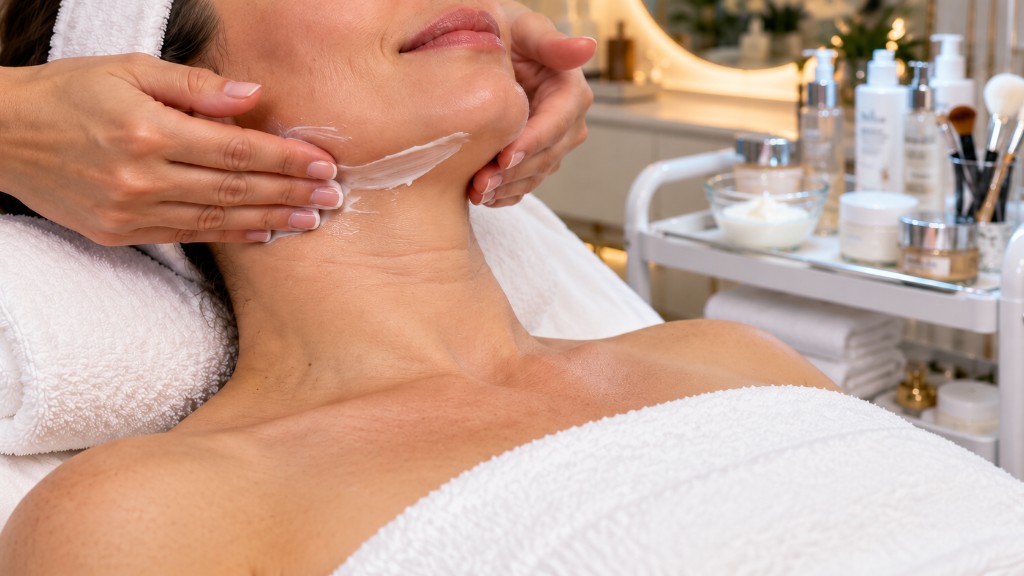
What does a double chin describe?
In everyday language, a double chin describes fullness or folding beneath the chin. It is not a medical diagnosis. Two people with a similar appearance in a mirror may need different assessments and options.
The American Society of Plastic Surgeons discusses under-chin fat deposits, loose skin and neck muscle bands as distinct concerns in the jawline and neck. [1] Understanding that distinction helps clarify what a proposed procedure is intended to address.
You can begin by saying you want to reduce a double chin, then describe the change that concerns you most. Is it volume beneath the chin, skin folding or an indistinct neck contour? If you have several concerns, they do not have to be presented as one treatment goal.
How are under-chin fat and loose skin assessed?
An examination considers fat distribution, skin laxity and neck contour together. Pinching the skin at home, tilting your chin upwards or looking at a photograph cannot replace diagnosis or individual treatment clearance.
Three preparation questions can help you describe your concern:
- Has the appearance been present for a long time, or has it changed recently?
- Is your main expectation less volume or firmer-looking skin?
- Is there a separate lump, pain or another symptom in the area?
Changing the angle of the chin can change its appearance in a photograph. More visible fullness in one pose does not demonstrate an immediate increase in fat. Have any confident online diagnosis checked through an examination.
If both fat and loose skin are being discussed, request a written explanation of which procedure targets which concern. This helps prevent the expectation that one application will transform the entire chin and neck contour.
Which goals do double chin reduction methods target?
The table below compares common approaches by their goals. It does not mean all the procedures are offered by Termal Şok or suitable for you.
| Approach | Main target | Limit to understand |
|---|---|---|
| Cooling-based fat reduction | Reduction of a localised fat bulge. [3] | The actual device must be intended for the under-chin area. |
| Prescription fat-reduction injections | Under-chin fat fullness in suitable adults. [4] | Product-specific safety information and professional assessment are required. |
| Ultrasound or radiofrequency tightening | Appearance associated with skin laxity. [2] | Fat reduction or surgery-equivalent results should not be assumed. |
| Surgical assessment | Fat, excess skin and neck structures considered together. [1] | Surgical risks and recovery need a separate discussion. |
| Facial and jawline care | The goals described for the service. [7] | A care-service description alone does not establish fat-reduction efficacy. |
There is no universal answer to the question of the best double chin reduction method. Clarifying the goal, suitability and limitations provides a more useful comparison.
Is every cold application a fat-freezing procedure?
No. The FDA describes cryolipolysis as a cooling technology intended to reduce fat bulges; the intended treatment area matters. Under-chin applications have also been associated with area-specific problems such as nerve effects and a feeling of fullness in the throat. [3]
Do not infer suitability for under-chin fat solely because a procedure uses cold. Ask for the manufacturer and model, and the documentation supporting the proposed protocol in that area.
The earlier cryolipolysis and CryoSlimming comparison distinguishes a technology from a service name. Research concerning a general technology should not automatically be transferred to another service.
What should you know about fat-reduction injections?
Injections are medical procedures distinct from facial care and device applications. The FDA's safety communication of 15 September 2026 describes risks associated with deoxycholic acid injections, including potentially persistent nodules or masses, nerve injury, difficulty swallowing and tissue damage, even when used beneath the chin. [4]
A US regulatory decision does not establish that a product is authorised in Türkiye or available at every provider. Check the exact product, its local authorisation and the qualifications of the person who would administer it.
The FDA also warns of infections, permanent scarring and painful nodules following unapproved fat-dissolving injections. Do not buy products online and inject yourself. [5] This article does not recommend a product, dose or injection technique.
Why does predominantly loose skin need a different discussion?
The American Academy of Dermatology discusses nonsurgical tightening options such as ultrasound and radiofrequency, while noting that substantial loose skin may not benefit from these approaches. [2] The degree of laxity and realistic expectations matter alongside the procedure name.
ASPS states that nonsurgical rejuvenation does not achieve the same results as a surgical neck lift. [1] This does not mean everyone needs surgery. A limited appearance goal, another specialist assessment or choosing no procedure may each be appropriate depending on the individual.
One useful consultation question is: “If fat were reduced, could the loose appearance that bothers me remain?” This helps establish whether a volume-focused plan is likely to address your actual expectation.
How should home methods, massage and creams be judged?
A change shown in a massage or exercise video should not be treated as evidence of lasting fat reduction. Check whether lighting, head position and facial expression are comparable in promotional photographs. Do not purchase an outcome based on a single image.
AAD describes firming creams and lotions as offering subtle results at best, rather than surgical lifting. [2] Using a product for basic skin care and relying on it as an under-chin fat-reduction method are different expectations.
Do not follow social-media instructions for home devices or intense cold applications. The FDA states that home-use fat freezing has not been established as safe and effective. [3] A product or movement routine should not delay a recommended medical assessment.
Is CryoFacial the same as under-chin fat reduction?
Termal Şok's CryoFacial page describes a nonsurgical care service using warm and cold cycles on the face and jawline. This description is not independent clinical evidence that it reduces under-chin fat or achieves the effects of a neck lift. [7]
Ask precisely why the service is being suggested: is the goal a care experience, facial appearance, jawline appearance or an effect on fat tissue? If fat reduction is claimed, ask separately for evidence relevant to the actual device and protocol.
The earlier cold skin care guide explains the terminology used for the different care services. Use the contact page to ask about the scope of the service and the initial assessment process.
What information should you share before a procedure?
Discuss previous face or neck procedures, medication, known medical conditions, reactions to cold, and pregnancy or breastfeeding. These can be relevant to suitability; this article cannot provide treatment clearance.
If you notice a distinct lump beneath the chin or in the neck, describe it separately from general fullness. The NHS recommends medical assessment of lumps that grow, feel hard and immobile, are painful or last longer than two weeks. [6] Seek emergency care if breathing becomes difficult.
Before deciding, ask which expectations the plan would not meet. You can request time to read written information without feeling obliged to purchase a session, product or device procedure immediately.
How should sessions, follow-up and cost be discussed?
There should not be a guaranteed session count before the goal and method are clear. Ask when the initial review will take place, what records will be examined and how any additional procedure would be justified.
Request comparable head position, posture and lighting in assessment photographs. Looking different after a session and demonstrating the intended fat reduction or tightening are separate claims.
A quote should identify the treatment area, device or product, review appointments and total scope. The earlier body contouring prices guide provides questions for comparing offers. A decision about double chin reduction should consider the goal, suitability and risks alongside the fee.