
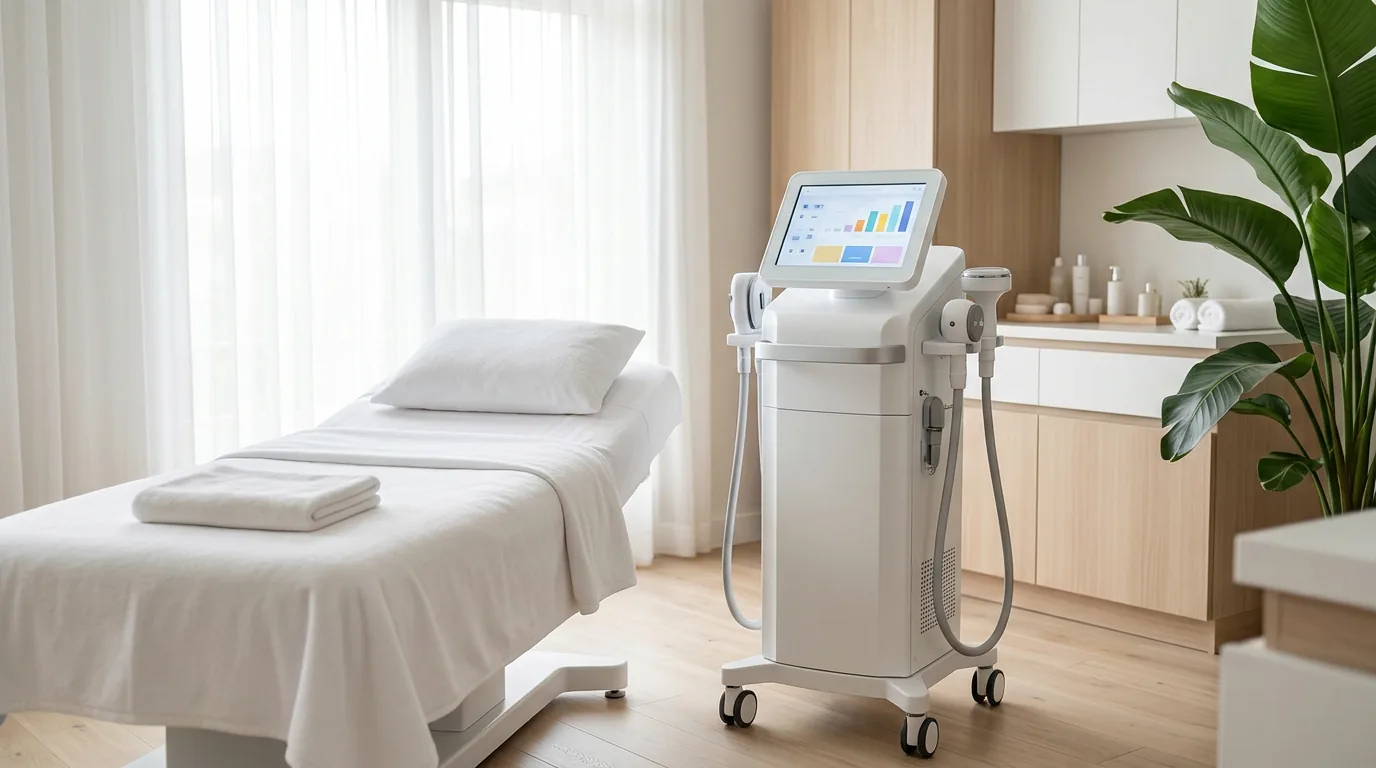
Body contouring devices aim to reduce the appearance of fat in specific areas without surgery. They work with different types of energy such as cold, heat, light or ultrasound. They are not a weight-loss method; they are considered for limited fat deposits that do not respond to diet and exercise. [1, 2]
Cold (cryolipolysis)
Cryolipolysis targets fat cells with cold. The FDA reports paradoxical adipose hyperplasia (PAH), in which fatty tissue in the treated area grows instead of shrinking, as a rare side effect. [1] We cover the risks in our cryolipolysis risks article and the difference from CryoSlimming in cryolipolysis vs CryoSlimming.
Radiofrequency
Radiofrequency energy creates heat in tissue. Some devices are used for body contouring and skin tightening. [1]
Ultrasound and laser
Ultrasound devices use sound waves to deliver energy to the fat layer beneath the skin. Some laser and intense pulsed light (IPL) devices also target tissue with heat. Each device has its own uses and limits. [1]
Combining cold and heat
CryoSlimming, offered at Termal Şok, alternates cold and heat. Suitability and the session plan are assessed at a consultation; results vary between people.
What to ask before treatment
- Which method is recommended and which uses and body areas the device has been reviewed for [1]
- Who will perform the treatment and their experience
- Possible side effects and what to do if they occur [1, 3]
- How many sessions are planned and how results will be followed up
Pregnancy and breastfeeding, some chronic conditions and open wounds or skin problems in the treatment area can affect suitability; mention these at the consultation. [1] For general information, see localized body contouring.
Sources
- FDA — Non-Invasive Body Contouring Technologies
- American Academy of Dermatology — Noninvasive fat reduction: What to expect
- American Society of Plastic Surgeons — Cryolipolysis
Sources reviewed on 25 November 2026. This article is for general information and does not replace a personal health assessment.