
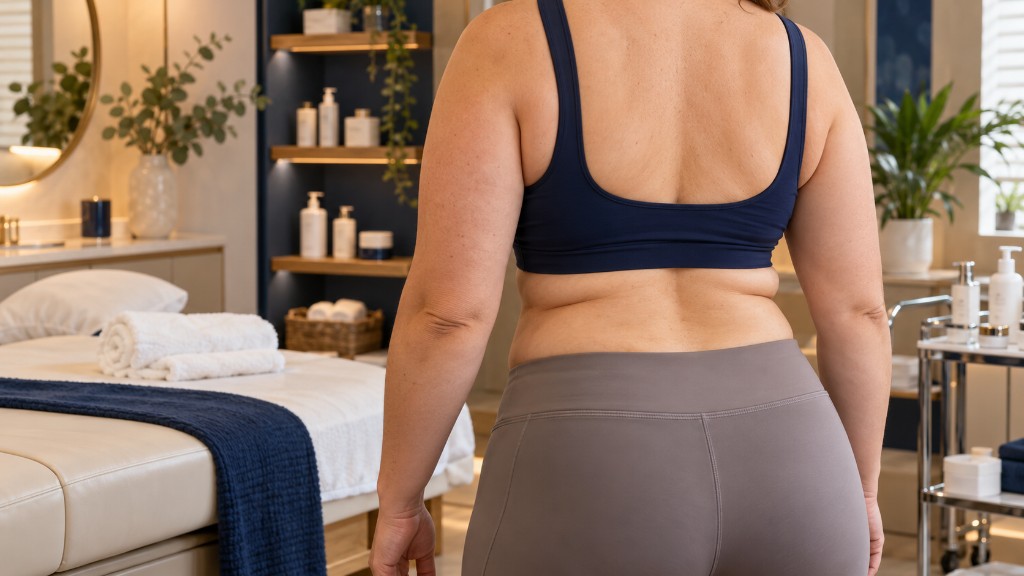
Which areas are described as back fat?
Back fat is an everyday term for fullness around the upper back, the edge of clothing or a bra, and the back of the waist. It is not a single medical diagnosis. Explaining which area you mean makes the scope of a recommendation easier to understand.
Go beyond “I want a slimmer back.” Is the concern around an upper clothing edge, folds at the sides, or the lower back? If several areas bother you, ask whether they are included in the same proposal.
Mention if you notice the appearance only with certain clothes or positions. One photograph cannot establish the amount of fat, health status or suitability for a procedure. The fit of clothing alone does not prove that new fat has developed.
How do fat, loose skin and a lump differ?
With one fold, volume may be your main concern; with another, skin folding or looseness may matter more. A fat-reduction recommendation should not be assumed to resolve excess skin to the same degree. Record those goals separately instead of using one broad label.
Do not equate a distinct swelling with general back fullness. NHS guidance describes lipomas as fatty lumps that can occur on the back, but recommends having a new lump checked by a doctor. [1] This is not an invitation to diagnose a lipoma by pressing it at home.
Explain how long the change has been present, whether it is growing and whether pain or other symptoms accompany it. If the concern is a separate lump, complete the recommended assessment before moving to a cosmetic plan.
Should the discussion focus on weight loss or local contouring?
Discuss overall weight and health objectives separately from a regional appearance concern. NHS guidance covers lifestyle changes and professional support options tailored to weight management. [2] This guide does not prescribe a diet, medicine or rapid weight-loss programme.
FDA guidance states that non-invasive body contouring is not an obesity treatment or a weight-loss method. [3] Researching a local service for back fat is therefore a different decision from planning overall weight management.
Make the goal specific: a change on the scales, the fit of a particular garment or the appearance of the back outline? Ask which goal the proposal may address and which it does not cover. An overall health benefit should not be promised from photographs of one area.
How should exercise for back fat be considered?
Performing a back exercise and knowing how much fat will change in that area are different matters. Feeling a muscle work, sweating or becoming tired does not demonstrate a particular amount of local fat loss. Avoid selecting a programme on the promise that one movement removes a fixed amount of back fat.
NHS activity guidance includes strengthening activities for major muscle groups, including the back. It recommends medical advice before starting if someone has not exercised for some time or has health concerns. [4]
Share any activity programme during assessment. Record changes in exercise, weight and other procedures occurring during follow-up. This helps avoid attributing every appearance change to one session. This article does not prescribe exercise choices or repetitions.
How should options for the back be compared?
Compare approaches by their intended change rather than grouping everything under slimming. The table does not mean that Termal Şok provides every listed procedure or that an option is suitable for you.
| Approach | Goal to clarify | Main limitation |
|---|---|---|
| Overall weight management | General weight and health objectives | A particular back fold needs a separate expectations discussion. |
| Non-surgical local contouring | Appearance in a defined area | Verify the actual device's intended use on the back. |
| Skin-tightening assessment | Loose-looking skin. [5] | Substantial excess skin may not respond sufficiently. |
| A surgical liposuction consultation | Fat removal from areas including the back. [6] | This is different from removing excess skin. |
| Monitoring without a procedure | Reconsidering the goal | A cosmetic procedure is optional. |
If several approaches are suggested, ask for the reason for each. Even if the same method is proposed for the upper and lower back, establish how the area is defined. “One area” may describe different coverage in two quotes.
Why does predominant skin laxity need a different goal?
AAD notes that non-surgical tightening is more suited to a small amount of laxity and may not help people with a large amount of sagging skin. [5] This general guidance does not establish the outcome of a branded service on the back.
ASPS also notes that loose skin may not reshape as expected after liposuction and that further surgical assessment may be needed. [6] Separating fat volume and skin appearance helps avoid expecting one procedure to resolve every concern.
Ask: “If the volume decreases, could the fold that bothers me remain?” If that question is unanswered, reassessing the goal may be more useful than buying additional sessions.
Is non-surgical back contouring risk-free?
Non-surgical does not mean risk-free. FDA guidance describes pain, bruising, numbness, cold burns and paradoxical adipose hyperplasia, where fat grows rather than shrinks, after fat freezing. [3] Risk information needs to relate to the actual proposed method.
Disclose medicines, previous back procedures, scars, implants and a history of reactions to cold. Mention pregnancy or breastfeeding. An online guide cannot replace device instructions and personal assessment.
When discussing risks, establish which symptoms require contacting whom. Do not accept severe pain or intense burning as a reason to push through a session. The response to a possible complication should be explained alongside the limits of the method.
How should CryoSlimming be discussed for the back?
Termal Şok's CryoSlimming service page describes regional contouring using warm and cold cycles. [7] That description does not establish suitability for every part of the back or guarantee a particular amount of fat reduction.
Ask whether back applications are offered, which device and protocol would be used and what supports the proposal. Do not automatically equate the service name with generic cryolipolysis. Results studied with another device should not be transferred directly to this service.
The comparison of cold lipolysis and CryoSlimming provides context for these terms. You can request information about the scope of the service through the contact page. That conversation should clarify the actual area and method before expectations about back fat are discussed as a personal plan.
What should you ask about sessions, price and follow-up?
Check whether the quote covers the upper back, both sides and the lower back. Request the total scope, review appointments and the conditions for recommending more sessions in writing. This guide does not provide an unverified price or a session count intended to apply to everyone.
Compare photographs using similar lighting, angle, distance, arm position and clothing. Changes in garment tightness or posture may mean two images do not represent the same conditions. An immediate post-session photograph does not establish durability.
Agree on a review date and record changes in weight and other procedures during the same period. Assess the plan against the agreed goal rather than one striking image. Ask how your records will be used and whether separate permission will be requested before sharing them.
When should medical assessment come first?
NHS guidance recommends assessment of a lump that grows, is hard and immobile, or is painful, red or hot. [1] Do not label a new distinct back swelling as a fat deposit and proceed to a body-care package. Highlight any accompanying symptoms during the initial conversation.